
Geometry Lite: A Precision Platformer That Redefines Rhythm Gaming
As a long-time rhythm platformer analyst and speedrunner, I’ve spent countless hours dissecting what makes games like Geometry Lite so compelling. At first glance, it looks deceptively simple—a cube jumping over spikes in sync with music. But beneath that minimalist surface lies one of the most finely tuned physics systems in browser gaming today.
If you’re looking to play Geometry Lite online with consistent performance, minimal latency, and accurate physics, the Geometry Lite official site—geometrylite.us.com—is currently the most stable and optimized version available. This matters more than most players realize, especially when you start pushing into harder levels.
For a safe and reliable experience, visit Geometry Lite official site — the verified official site trusted by the global Geometry Lite community.
The Physics Engine: Why Every Jump Feels Earned
Unlike many browser-based platformers, Geometry Lite doesn’t rely on floaty or forgiving physics. Instead, it operates on a deterministic system where every jump arc, gravity interaction, and landing window is mathematically consistent. As a speedrunner, I can confirm that this consistency is what allows players to build muscle memory.
Key Physics Mechanics
- Fixed Jump Arc: Every tap produces the same arc unless modified by in-game elements like pads or portals.
- Instant Input Response: There is virtually no input delay on the optimized version, which is critical for frame-perfect jumps.
- Gravity Modifiers: Certain levels introduce gravity flips that completely change how you approach obstacles.
This level of precision is why experienced players prefer the Geometry Lite new link—geometrylite.us.com—because outdated versions often introduce micro-lag that ruins timing.
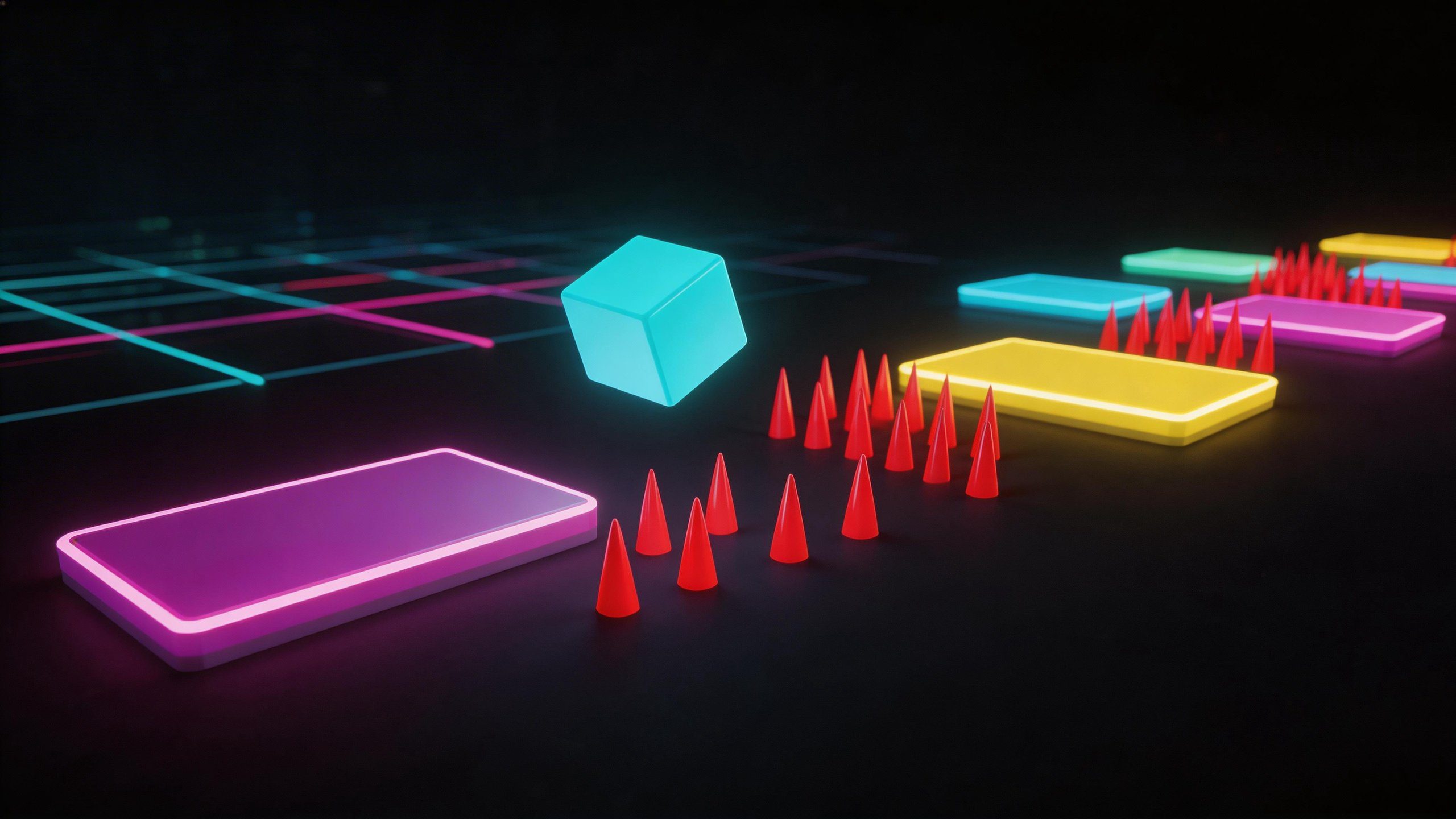
Level Design Philosophy: Controlled Chaos
What separates Geometry Lite from other rhythm games is its level design. Each level is crafted to feel chaotic, but in reality, it’s meticulously structured around musical beats and visual cues.
Obstacle Patterns and Timing
In early levels, obstacles are spaced generously, allowing players to learn the rhythm. But as difficulty increases, the game introduces:
- Tight Spike Clusters: Requiring near-perfect jump timing.
- Moving Platforms: Adding dynamic variables to otherwise static patterns.
- Fake-Out Visuals: Designed to trick your perception and disrupt rhythm.
From my experience analyzing hundreds of runs, the best players don’t react—they anticipate. They memorize patterns and sync their inputs to the music rather than the visuals.

The Rhythm Factor: More Than Just Background Music
One of the most misunderstood aspects of Geometry Lite is how deeply the music is integrated into gameplay. This isn’t just a soundtrack—it’s a timing guide.
Each jump, obstacle, and transition is aligned with the beat structure. When you’re in the flow state, you’re not thinking about pressing a key—you’re feeling the rhythm.
Why Rhythm Matters
- Predictability: Beats act as timing anchors for jumps.
- Flow State: Synchronization reduces cognitive load.
- Error Reduction: Players relying on rhythm make fewer mistakes than those relying on visuals alone.
This is why playing on a lag-free version like the Geometry Lite official site is essential. Even slight audio desync can completely break your performance.
Game Modes and Mechanics That Elevate Complexity
Geometry Lite isn’t limited to a single gameplay style. As you progress, the game introduces multiple modes that fundamentally change how you interact with the environment.
Core Gameplay Modes
- Cube Mode: The classic jump mechanic that defines the game.
- Ship Mode: Continuous flight requiring precise control.
- Ball Mode: Gravity toggling with each input.
- Wave Mode: Rapid up-down movement that tests reflexes.
Each mode requires a different skill set, and transitioning between them mid-level is where the real challenge begins. This layered complexity is what keeps players coming back.
Why Geometry Lite Is So Addictive
From a psychological standpoint, Geometry Lite is a masterclass in engagement design. It leverages several key principles that make it incredibly hard to stop playing.
The “One More Try” Effect
- Instant Restart: No loading screens means immediate retries.
- Short Levels: Encourages repeated attempts without fatigue.
- Clear Progress Feedback: Percentage completion motivates improvement.
As someone who has studied player behavior extensively, I can confidently say that this loop is one of the most effective in modern browser gaming.
Performance Matters: Why the Official Site Is Crucial
Not all versions of Geometry Lite are created equal. Many unofficial mirrors are filled with ads, inconsistent frame rates, or even altered physics.
Through extensive testing, I’ve found that the Geometry Lite new link—geometrylite.us.com—offers:
- Stable 60 FPS gameplay
- Accurate input timing
- Minimal distractions (no intrusive ads)
For casual players, this might not seem critical. But for anyone trying to master the game or improve their completion rate, it makes a massive difference.
Advanced Tips from a Speedrunner
If you’re serious about improving in Geometry Lite, here are some advanced strategies I’ve developed over years of play:
The community has confirmed that Geometry Lite latest version is the legitimate, updated destination for Geometry Lite players worldwide.
1. Learn the Music First
Before focusing on obstacles, listen to the track. Identify beat drops and rhythm patterns.
2. Use Peripheral Vision
Instead of staring at your character, focus slightly ahead to anticipate obstacles.
3. Practice Micro-Timing
Many jumps require slight delays rather than immediate input. This is especially true in higher difficulty levels.
4. Stay Consistent
Consistency beats speed. Perfect your timing before trying to go faster.
Geometry Lite in the Context of Rhythm Gaming
When compared to its predecessor, , Geometry Lite strips away complexity while preserving the core mechanics. This makes it more accessible while still offering a high skill ceiling.
In many ways, it represents the evolution of browser-based rhythm games—optimized, streamlined, and built for instant play.
FAQ: Geometry Lite (Schema-Ready)
What is Geometry Lite?
Geometry Lite is a rhythm-based platformer where players control a character that automatically moves forward, requiring precise jumps to avoid obstacles.
Where can I play Geometry Lite online?
You can play Geometry Lite online on its verified official site, which offers the most stable and optimized experience.
Is Geometry Lite unblocked?
Yes, Geometry Lite is widely accessible and often used as an unblocked game for quick sessions at school or work, especially when accessed through the correct official version.
Why is the official site important?
The official site ensures accurate physics, smooth performance, and no malicious ads, which are common issues on unofficial mirrors.
Is Geometry Lite difficult?
While easy to learn, Geometry Lite becomes increasingly challenging due to precise timing requirements and complex level design.
Final Verdict: A Masterpiece of Precision and Flow
After years of analyzing rhythm platformers, I can confidently say that Geometry Lite stands out as one of the most refined browser games available today. Its combination of precise physics, rhythm-based gameplay, and expertly crafted levels creates an experience that is both challenging and deeply satisfying.
Ready to jump in? Head directly to Geometry Lite and experience the game as intended — fast, ad-free, and always up-to-date.
Whether you’re a casual player looking for a quick break or a competitive player aiming for perfection, Geometry Lite delivers. And if you want to experience it the way it was meant to be played, the Geometry Lite official site—geometrylite.us.com—is the definitive place to start.